
How Tokenized Real-World Assets Are Reshaping Middle East Capital Flows: What Global Protocols Need to Know
For decades, the vast wealth of the Middle East, particularly within the Gulf Cooperation Council (GCC) states, has been synonymous with oil, real estate, and traditional financial instruments. However, a profound transformation is underway. Driven by a strategic imperative to diversify their economies and assert greater financial sovereignty, the region’s institutional investors, family offices, and sovereign wealth funds are turning their attention to a new and powerful financial primitive: the tokenization of real-world assets (RWA). This is not a speculative dalliance with crypto; it is a calculated, long-term strategy to reshape the flow of capital, enhance liquidity, and build a more efficient and transparent financial infrastructure. For global Web3 protocols, this shift represents one of the most significant opportunities of the coming decade.
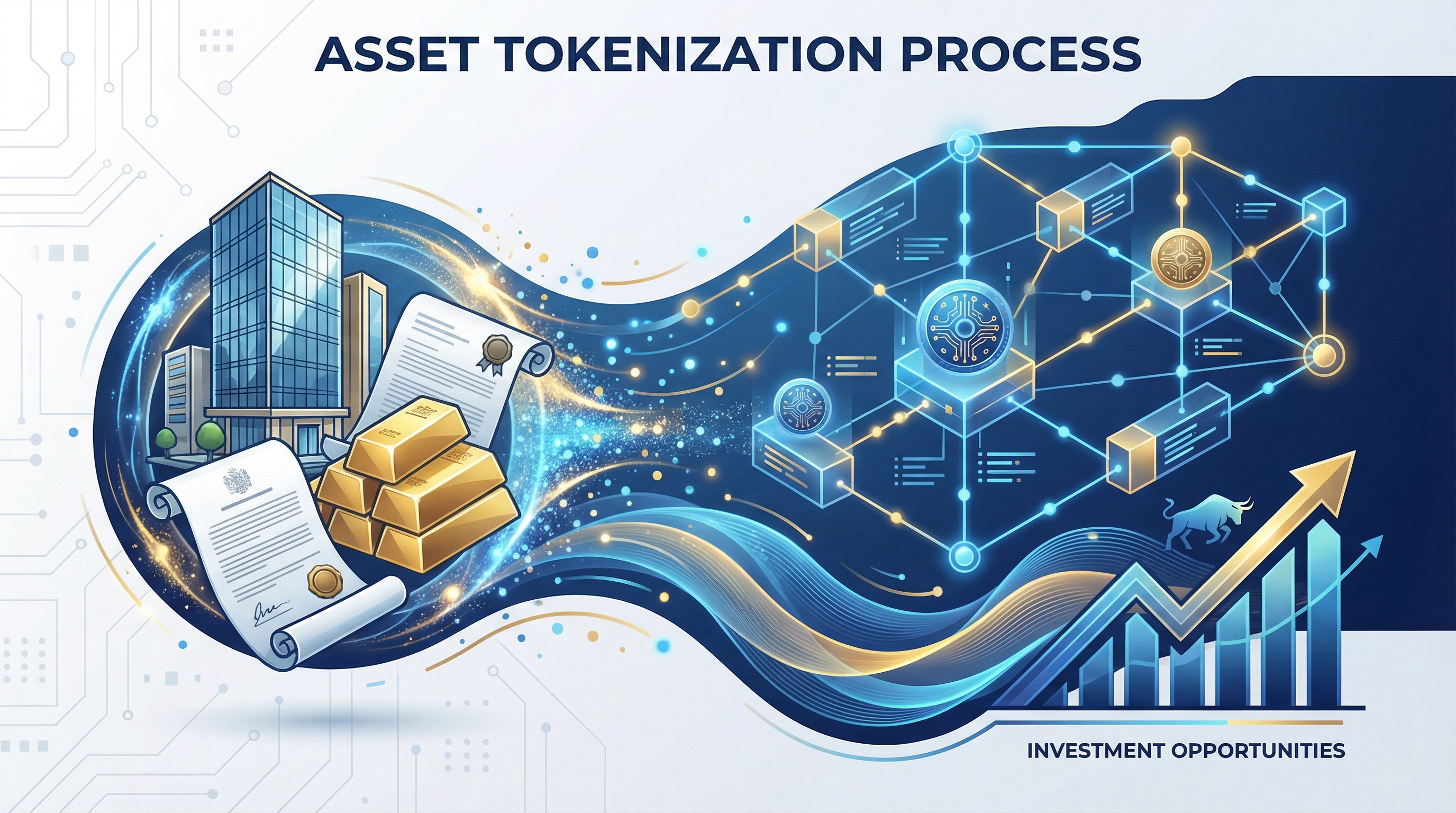 Image: The process of asset tokenization, where real-world assets are converted into digital tokens on a blockchain, is unlocking new liquidity and investment opportunities.
The concept of RWA tokenization—representing ownership of assets like real estate, private equity, bonds, and trade finance instruments as digital tokens on a blockchain—is gaining global traction. McKinsey predicts that the market for tokenized assets could reach a staggering $4 trillion by 2030 [1]. Yet, nowhere is the potential impact of this innovation more acute than in the Middle East. The region’s unique combination of immense private wealth, state-led economic development, and a strategic pivot away from Western-dominated financial systems creates a perfect storm for the rapid adoption of RWA tokenization.
As the Carnegie Endowment for International Peace highlights, the GCC states are not just modernizing their financial infrastructure; they are deliberately repositioning themselves in a global contest for influence [2]. This involves strengthening ties with economic powerhouses like China and the BRICS+ nations, and actively exploring alternatives to the U.S. dollar-denominated trade and investment ecosystem. RWA tokenization is a key enabler of this strategy. By creating liquid, easily transferable, and globally accessible digital representations of their vast real-world asset holdings, GCC nations can attract a new wave of international investment, facilitate more efficient cross-border capital flows, and ultimately, enhance their geopolitical leverage.
The Three Forces Driving RWA Adoption in the GCC
The rapid acceleration of interest in RWA tokenization in the Middle East is not a spontaneous phenomenon. It is the result of three powerful, converging forces.
1. The Drive for Economic Diversification and Liquidity
The GCC nations are acutely aware of the long-term vulnerabilities of their oil-dependent economies. Ambitious national transformation plans, such as Saudi Arabia's Vision 2030 and the UAE's Centennial Plan 2071, are predicated on diversifying their economic base and unlocking the value of their non-oil assets. The region holds trillions of dollars in illiquid real-world assets, from sprawling real estate developments to extensive private equity portfolios. Tokenization offers a powerful mechanism to unlock this trapped value.
By converting these illiquid assets into fractional, tradable digital tokens, the region’s institutions can create new sources of liquidity, attract a broader and more global investor base, and generate new revenue streams. For example, a large-scale real estate project in Dubai could be tokenized, allowing investors from Asia, Europe, and the Americas to purchase fractional ownership with unprecedented ease and transparency. This not only brings new capital into the region but also enhances the price discovery and market efficiency for these assets.
2. The Strategic Pursuit of Financial Sovereignty
The weaponization of the U.S. dollar through sanctions and the dominance of Western financial intermediaries like SWIFT have not gone unnoticed in the Gulf. There is a clear and growing desire to build a more resilient and multipolar global financial system. RWA tokenization, particularly when combined with the development of Central Bank Digital Currencies (CBDCs) and new cross-border payment platforms, is a critical tool in this endeavor.
Tokenized assets can be traded on decentralized platforms, settled in a variety of digital currencies (including CBDCs), and cleared almost instantaneously without relying on the traditional correspondent banking system. This creates the potential for a parallel financial ecosystem that is more resistant to geopolitical pressures and external control. The active exploration of CBDCs by the UAE and Saudi Arabia, including the joint Project Aber, and their engagement with China’s m-CBDC Bridge project, are clear indicators of this strategic direction [2]. Global protocols that can provide the infrastructure for this new ecosystem—from tokenization platforms to decentralized exchanges and cross-border payment solutions—will find themselves in high demand.
3. The Intersection with Islamic Finance
A crucial, and often overlooked, driver of RWA tokenization in the Middle East is its natural alignment with the principles of Islamic finance. One of the core tenets of Sharia-compliant finance is the principle of asset-backing; every financial transaction should be tied to a tangible, real-world asset. This stands in contrast to the conventional financial system's reliance on interest-based lending and speculative derivatives.
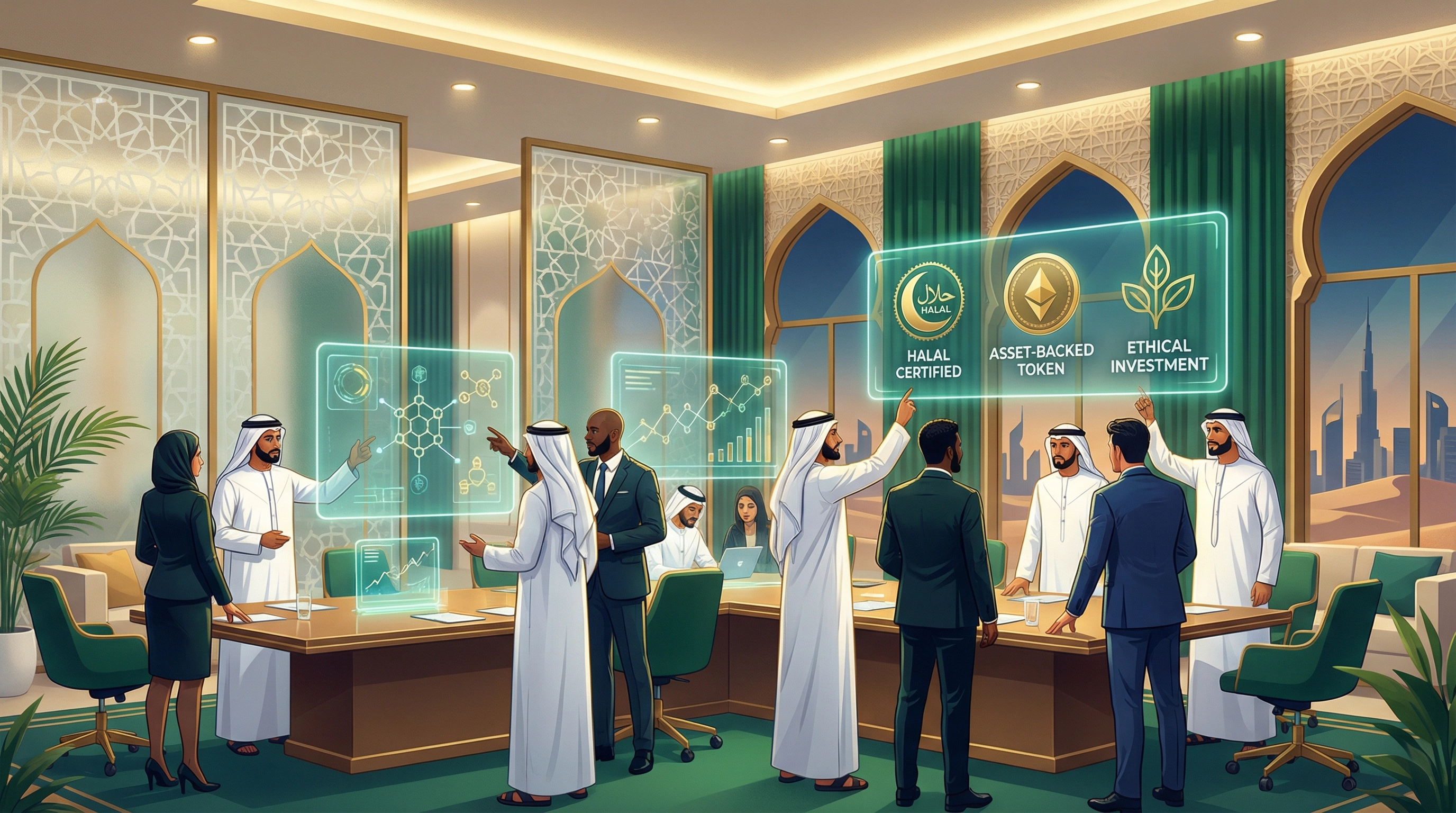 Image: Family offices and institutional investors in the Middle East are increasingly looking to digital assets, with a particular focus on those that align with principles of Islamic finance.
RWA tokenization is, by its very nature, an asset-backed form of finance. Each token represents a direct, verifiable claim on a real-world asset. This makes it far more palatable to Sharia-conscious investors and institutions than un-backed, speculative cryptocurrencies. Protocols that can structure their tokenization offerings in a Sharia-compliant manner—for example, by ensuring the underlying assets are permissible (halal) and by structuring the returns as profit-sharing rather than interest—will unlock access to a massive and largely untapped pool of institutional and private wealth. This requires a deep understanding of Islamic jurisprudence and a willingness to work with Sharia scholars and advisory boards to ensure full compliance.
What Global Protocols Need to Know
For global Web3 protocols looking to capitalize on this opportunity, a superficial, one-size-fits-all approach will not suffice. Success in the GCC’s RWA market requires a nuanced and deeply localized strategy.
1. Build for the Institution, Not the Retail Trader: The RWA market in the Middle East will be dominated by sovereign wealth funds, large family offices, and major corporations. These players demand institutional-grade infrastructure. This means robust security, regulatory compliance, and professional-grade asset management tools. Your protocol must be able to demonstrate a level of security and professionalism that is on par with the traditional financial institutions they are used to dealing with. This includes achieving certifications like SOC 2 Type II and ISO 27001 [3].
2. Prioritize Regulatory and Sharia Compliance: Do not treat compliance as an afterthought. Engage with regulators in key jurisdictions like the ADGM and DIFC early and often. More importantly, invest in building a deep understanding of Islamic finance. Partner with Sharia advisory firms to structure your tokenization offerings in a compliant manner. This will be a powerful differentiator and a key to unlocking the most significant pools of capital.
3. Forge Local Partnerships: Business in the Middle East is built on trust and relationships. It is essential to have a physical presence in the region and to forge strong partnerships with local institutions, family offices, and government entities. These partners will provide invaluable insights into the local market, help navigate the complex regulatory and cultural landscape, and provide access to key decision-makers.
Conclusion: The New Silk Road is Digital
The tokenization of real-world assets is set to fundamentally reshape the landscape of global finance, and the Middle East is positioning itself to be at the very center of this transformation. The region’s immense wealth, strategic ambition, and unique cultural and financial context create an unparalleled opportunity for Web3 protocols that are prepared to meet the challenge.
This is more than just a new market; it is the chance to participate in the construction of a new, multipolar financial world. The protocols that succeed will be those that understand that they are not just offering a technology, but a solution to some of the most pressing economic and geopolitical challenges of our time. They will be the ones that combine technological innovation with deep regulatory insight, cultural understanding, and an unwavering commitment to institutional-grade excellence. For these protocols, the new Silk Road will not be paved with asphalt, but with the digital rails of a tokenized future.
References
[1] McKinsey & Company. (2023, August 23). Tokenization: A turning point for digital assets. Retrieved from https://www.mckinsey.com/industries/financial-services/our-insights/tokenization-a-turning-point-for-digital-assets
[2] Kolkaila, A. (2025, May 21). The Future of Cryptocurrency in the Gulf Cooperation Council Countries. Carnegie Endowment for International Peace. Retrieved from https://carnegieendowment.org/research/2025/05/the-future-of-cryptocurrency-in-the-gulf-cooperation-council-countries?lang=en
[3] Blockdaemon. (n.d.). Blockchain Security & Compliance | ISO 27001 & SOC 2 Type II Certified. Retrieved November 30, 2025, from https://www.blockdaemon.com/security


