
The Hidden Risks of KOL Marketing in Web3: How Institutional Investors Are Rethinking Influencer Strategy
In the fast-paced, hype-driven world of Web3, Key Opinion Leaders (KOLs) and influencers have become an indispensable part of the marketing playbook. With their ability to reach vast audiences, demystify complex technologies, and generate immediate market momentum, it is no surprise that projects have allocated significant budgets to influencer campaigns. However, beneath the surface of viral tweets and bullish YouTube videos lies a landscape fraught with hidden risks—risks that are causing institutional investors, family offices, and sophisticated market participants to fundamentally rethink their approach to influencer-led growth.
 Image: The world of Web3 KOL marketing is complex, requiring careful navigation to avoid regulatory and reputational pitfalls.
The allure of KOL marketing is undeniable. A single endorsement can send a token's price soaring, drive a surge in community growth, and attract the attention of venture capitalists. Yet, the very dynamics that make this channel so powerful also make it incredibly perilous. The largely unregulated nature of the crypto space, combined with the financial incentives at play, has created a fertile ground for deceptive practices, regulatory arbitrage, and catastrophic reputational damage. For institutional investors, who prioritize long-term value and risk management, the traditional model of Web3 influencer marketing is no longer tenable.
The U.S. Securities and Exchange Commission (SEC) has made it abundantly clear that it is closely watching the space. In a landmark case in December 2022, the SEC charged eight social media influencers in a $100 million stock manipulation scheme promoted on Discord and Twitter [1]. The influencers were alleged to have engaged in a classic "pump and dump" scheme, encouraging their followers to buy certain securities only to sell their own holdings once the price had risen. This case, along with numerous other enforcement actions against celebrities and influencers for unlawfully touting crypto asset securities, serves as a stark warning: the "Wild West" era of crypto marketing is over. Regulators are not only willing but eager to pursue enforcement actions against those who mislead investors, regardless of their follower count.
The Three Categories of Risk
The risks associated with Web3 influencer marketing can be broadly categorized into three areas: regulatory, reputational, and financial. For institutional investors, each of these represents a potential threat to their capital and their credibility.
1. Regulatory Risk: A Moving Target
The primary regulatory risk in Web3 influencer marketing revolves around the promotion of unregistered securities. If a token is deemed to be a security under the Howey Test, any individual promoting it must comply with securities laws, which include strict rules around disclosure and compensation. Many influencers, either through ignorance or willful negligence, fail to do so. They may not disclose that they have been paid for a promotion, or that they hold a position in the token they are endorsing. This is a direct violation of the anti-touting provisions of the federal securities laws.
The SEC's stance is clear: "These celebrities and others used their influence to tout a crypto asset security," said Gurbir S. Grewal, Director of the SEC's Division of Enforcement, in a statement regarding another case. "Investors should be skeptical of investment advice posted to social media platforms and should not make decisions based on celebrity endorsements" [2]. The commission has consistently emphasized that the onus is on the promoter to understand and comply with the law. For a project that engages these influencers, the regulatory blowback can be severe, including hefty fines, disgorgement of ill-gotten gains, and permanent injunctions.
Furthermore, the regulatory landscape is constantly evolving. What might be considered acceptable practice today could be the subject of an enforcement action tomorrow. This uncertainty is a major red flag for institutional investors, who require a high degree of legal and regulatory clarity. They are increasingly demanding that projects demonstrate a robust compliance framework for their marketing activities, including a thorough vetting process for all influencers and KOLs.
2. Reputational Risk: Trust is Everything
In the Web3 space, reputation is arguably a project's most valuable asset. Trust is the foundation upon which communities are built, capital is raised, and ecosystems are grown. An association with a disreputable influencer can shatter that trust in an instant.
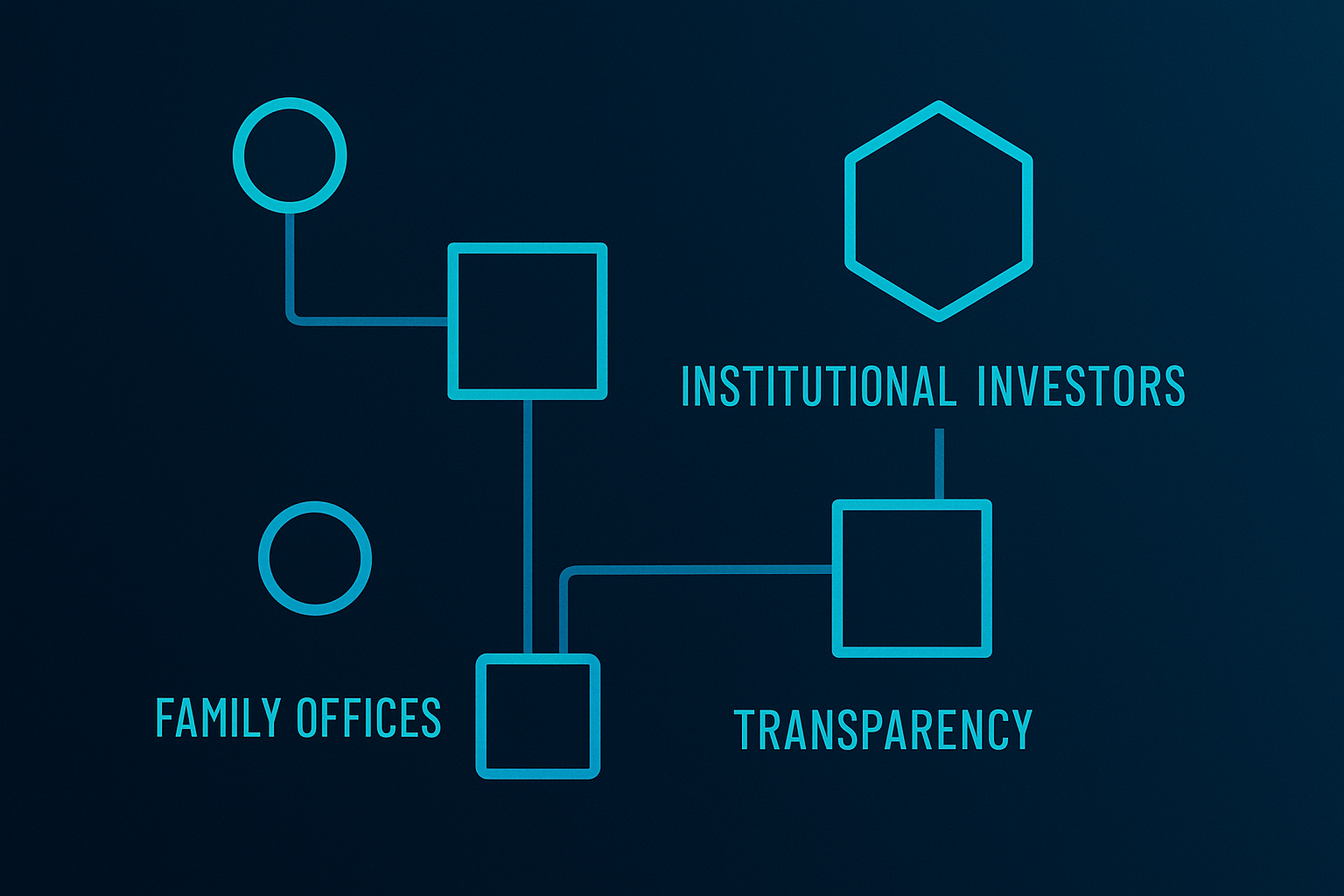 Image: Institutional investors and family offices are increasingly scrutinizing the marketing strategies of Web3 projects, demanding greater transparency and compliance.
The crypto world is rife with influencers who have been accused of promoting scams, engaging in pump and dump schemes, or simply providing poor-quality, self-serving analysis. When a project aligns itself with such individuals, it is, by extension, endorsing their past behavior. For an institutional investor, this is an unacceptable risk. They are not just investing in a technology; they are investing in a team and a community. Any action that undermines the integrity of that community is a direct threat to their investment.
Moreover, the due diligence process for institutional investors now extends far beyond the technical merits of a project. They are conducting deep dives into a project's marketing strategies, including a thorough review of all KOLs and influencers they have engaged. They are looking for red flags such as: a history of promoting failed or fraudulent projects, a lack of transparency around compensation, and a pattern of making unrealistic price predictions. A project with a clean, transparent, and compliance-conscious marketing strategy is far more likely to attract institutional capital than one that relies on hype and speculation.
3. Financial Risk: The Cost of Inauthenticity
The financial risks of poorly executed KOL marketing are twofold. First, there is the direct cost of engaging influencers, which can be exorbitant. Many top-tier KOLs command fees in the tens or even hundreds of thousands of dollars for a single promotion. If that promotion fails to deliver a positive return on investment, or worse, leads to regulatory or reputational damage, that capital is wasted.
Second, there is the indirect financial risk of attracting the wrong kind of community. Influencer campaigns that focus on short-term price action and speculative hype tend to attract "mercenary capital"—investors who are only interested in a quick profit and will dump the token at the first sign of trouble. This creates a volatile and unstable ecosystem that is unattractive to long-term, value-oriented institutional investors. A project with a community built on a foundation of speculation is a house of cards, and institutional investors know it.
The Institutional-Grade Framework for KOL Engagement
In response to these risks, a new framework for KOL engagement is emerging—one that is designed to meet the exacting standards of institutional investors. This framework is built on the principles of transparency, compliance, and long-term value creation.
1. Rigorous Vetting and Due Diligence: The first step is a comprehensive vetting process for all potential KOLs. This goes beyond simply looking at their follower count. It involves a deep dive into their history, their content, and their reputation. Projects must ask: Have they promoted fraudulent projects in the past? Are they transparent about their compensation? Do they provide thoughtful, well-researched analysis, or do they rely on hype and speculation? Only those KOLs who meet the highest standards of integrity and professionalism should be considered.
2. Ironclad Legal and Compliance: Every KOL engagement must be governed by a clear, legally binding contract that explicitly outlines the terms of the relationship. This includes full disclosure of compensation, a commitment to comply with all relevant securities laws, and clear guidelines on the content of the promotion. The contract should also include clauses that protect the project from liability in the event of a regulatory breach by the influencer.
3. Focus on Education and Long-Term Value: The most effective KOL campaigns are not those that focus on short-term price action, but those that focus on educating the market about the long-term value proposition of the project. Institutional investors are looking for projects that are building sustainable ecosystems, and they want to see marketing campaigns that reflect that long-term vision. KOLs should be engaged to create in-depth content—such as technical deep dives, ecosystem analyses, and founder interviews—that builds genuine understanding and conviction in the project.
4. Performance-Based Compensation: Rather than paying exorbitant upfront fees, projects should explore performance-based compensation models that align the interests of the KOL with the long-term success of the project. This could include vesting schedules for token-based compensation, or bonuses tied to metrics such as community growth, developer adoption, or on-chain activity. This ensures that KOLs are incentivized to act as long-term partners, not short-term promoters.
Conclusion: The Flight to Quality
The world of Web3 marketing is undergoing a "flight to quality." As the market matures and institutional capital becomes more influential, the old playbook of hype-driven, speculative marketing is becoming obsolete. The risks—regulatory, reputational, and financial—are simply too great.
For Web3 projects seeking to attract institutional investment, the message is clear: your marketing strategy is a direct reflection of your project's integrity and long-term vision. A reliance on disreputable influencers and non-compliant promotional tactics is a major red flag that will deter serious investors. Conversely, a commitment to transparency, compliance, and long-term value creation will be a powerful differentiator.
The future of Web3 belongs to those projects that can build sustainable ecosystems grounded in trust and credibility. This requires a new kind of marketing—one that prioritizes education over speculation, transparency over obfuscation, and long-term partnership over short-term promotion. For institutional investors, this is not just a preference; it is a prerequisite.
References
[1] U.S. Securities and Exchange Commission. (2022, December 14). SEC Charges Eight Social Media Influencers in $100 Million Stock Manipulation Scheme Promoted on Discord and Twitter. Retrieved from https://www.sec.gov/newsroom/press-releases/2022-221
[2] U.S. Securities and Exchange Commission. (2022, October 3). SEC Charges Kim Kardashian for Unlawfully Touting Crypto Security. Retrieved from https://www.sec.gov/news/press-release/2022-183
[3] 5W Public Relations. (2025, November 29). How To Run Compliant Web3 Influencer Campaigns. Retrieved from https://www.5wpr.com/new/how-to-run-compliant-web3-influencer-campaigns/


