
Why Middle East Web3 Market Entry Requires More Than Capital: A Strategic Framework for Institutional Protocols
The global Web3 landscape is in a constant state of flux, with emerging markets offering both tantalizing opportunities and unforeseen challenges. Among these, the Middle East, particularly the Gulf Cooperation Council (GCC) states, has emerged as a beacon for institutional protocols, attracting significant attention due to its deep capital reserves, ambitious economic diversification plans, and a burgeoning, tech-savvy population. However, the allure of petrodollars and gleaming futuristic cityscapes can mask a complex reality. For institutional-grade Web3 projects, a successful market entry into this region demands far more than just a robust treasury; it requires a sophisticated, multi-layered strategy grounded in regulatory acumen, geopolitical awareness, and operational resilience.
 Image: The futuristic skyline of Dubai, a city at the forefront of the GCC's push into Web3 and blockchain technology.
As Western financial systems grapple with regulatory uncertainty, the GCC states are deliberately positioning themselves as global hubs for digital finance. This strategic pivot is not merely about modernization; it is a calculated move to diversify their economies away from oil dependency and reduce their reliance on the U.S.-dominated monetary system [2]. The entry of the United Arab Emirates (UAE) and Saudi Arabia into the BRICS+ bloc, coupled with deepening partnerships with China and Russia, underscores a broader geopolitical recalibration. For Web3 protocols, this context is critical. It signals a region that is not just open for business, but is actively seeking to build a new financial infrastructure, offering a unique opportunity for projects that can align with these long-term strategic goals.
The numbers are compelling. The Middle East & North Africa (MENA) region is the seventh-largest crypto market globally, having received an estimated $338.7 billion in on-chain value between July 2023 and June 2024 [1]. The GCC's crypto market alone was valued at $744.3 million in 2024 and is projected to grow at a compound annual growth rate (CAGR) of 16.75% through 2033 [2]. This growth is overwhelmingly driven by institutional and professional-level activity, with 93% of value transferred consisting of transactions of $10,000 or more [1]. This institutional dominance makes the region a prime target for serious Web3 protocols. However, the path to capturing this market is fraught with complexities that a purely capital-driven approach will fail to navigate.
The Three Pillars of a Strategic Framework
A successful market entry strategy for the GCC region must be built on three core pillars: navigating the fragmented regulatory landscape, understanding the deep-seated cultural and geopolitical nuances, and demonstrating institutional-grade operational security. Overlooking any one of these can lead to costly missteps, reputational damage, and ultimately, market rejection.
Pillar 1: Navigating the Fragmented Regulatory Maze
Unlike the more monolithic (though still evolving) regulatory environments in the U.S. or Europe, the GCC is a patchwork of jurisdictions, each with its own approach to digital assets. This requires a granular, country-by-country strategy, not a one-size-fits-all regional plan.
The UAE, the region's undisputed trailblazer, offers the most mature and welcoming framework. It has established multiple regulatory bodies, including the federal Securities and Commodities Authority (SCA), the Central Bank's oversight of payment tokens, and the independent regimes within its two financial free zones: Abu Dhabi Global Market (ADGM) and the Dubai International Financial Centre (DIFC). Most notably, Dubai’s Virtual Assets Regulatory Authority (VARA), established in 2022, was the world’s first standalone regulator for virtual assets, signaling a clear intent to attract global talent and capital [1].
In stark contrast, Saudi Arabia has adopted a more cautious stance. While it is the region's second-largest and fastest-growing market, propelled by strong grassroots adoption among its massive youth population, the Saudi Arabian Monetary Authority (SAMA) has officially banned crypto trading by financial institutions, citing concerns over speculative risk and Sharia compliance [2]. Yet, beneath this official caution, SAMA is actively promoting blockchain adoption, and major global players like Rothschild and Goldman Sachs are planning to launch tokenization projects in the Kingdom. This dichotomy between official policy and market reality requires careful navigation.
Other GCC nations present their own unique challenges. Bahrain and Oman have adopted a regulation-first posture, prioritizing the establishment of comprehensive compliance and licensing frameworks before encouraging rapid adoption. Meanwhile, Kuwait and Qatar have historically been the most restrictive, though Qatar is beginning to soften its stance, with the Qatar Financial Centre developing a legal framework for digital assets expected in 2025 [2].
 Image: A chart illustrating the diverse and growing crypto market across the Middle East and North Africa, highlighting the need for localized strategies.
Furthermore, Sharia compliance is a consideration that cannot be overstated. The speculative nature of many cryptocurrencies has raised concerns among Islamic scholars, leading to divergent rulings and influencing regulatory postures. Protocols that can demonstrate alignment with principles of Islamic finance—such as risk-sharing, asset-backing, and the avoidance of excessive uncertainty (gharar)—will have a significant advantage in attracting institutional capital from the region, particularly from family offices and sovereign wealth funds that operate under these principles.
Pillar 2: Cultural and Geopolitical Acumen
Business in the Middle East is built on relationships. A transactional, Western-style approach of simply presenting a superior technology or a lucrative investment opportunity is unlikely to succeed. Building trust and credibility with key stakeholders—regulators, institutional investors, and family offices—is paramount. This requires a long-term commitment to the region, a physical presence, and a deep understanding of the local culture.
Moreover, the geopolitical shifts underway are reshaping the flow of capital and influence. The GCC's pivot towards the East is not merely symbolic. It represents a tangible move to de-risk from over-reliance on the U.S. dollar and Western financial institutions. Protocols that can facilitate this transition, for instance by enabling cross-border payments with BRICS+ nations or offering stablecoin solutions pegged to local currencies, will find themselves in a highly advantageous position. Tether's recent announcement of plans to launch a Dirham-pegged stablecoin is a prime example of this trend [1].
For CISOs and founders, this means that go-to-market strategies must be geopolitically informed. It involves understanding the strategic priorities of each GCC nation, their key international partners, and how digital assets fit into their long-term vision for economic sovereignty. It also means recognizing that decisions are often made at the highest levels of government, and access to these decision-makers is often facilitated through trusted local partners.
Pillar 3: Demonstrating Institutional-Grade Operational Security
Institutional investors in the GCC, including sovereign wealth funds and large family offices, are among the most sophisticated and risk-averse in the world. They will not allocate significant capital to projects that cannot demonstrate institutional-grade security and operational resilience. This goes far beyond basic smart contract audits.
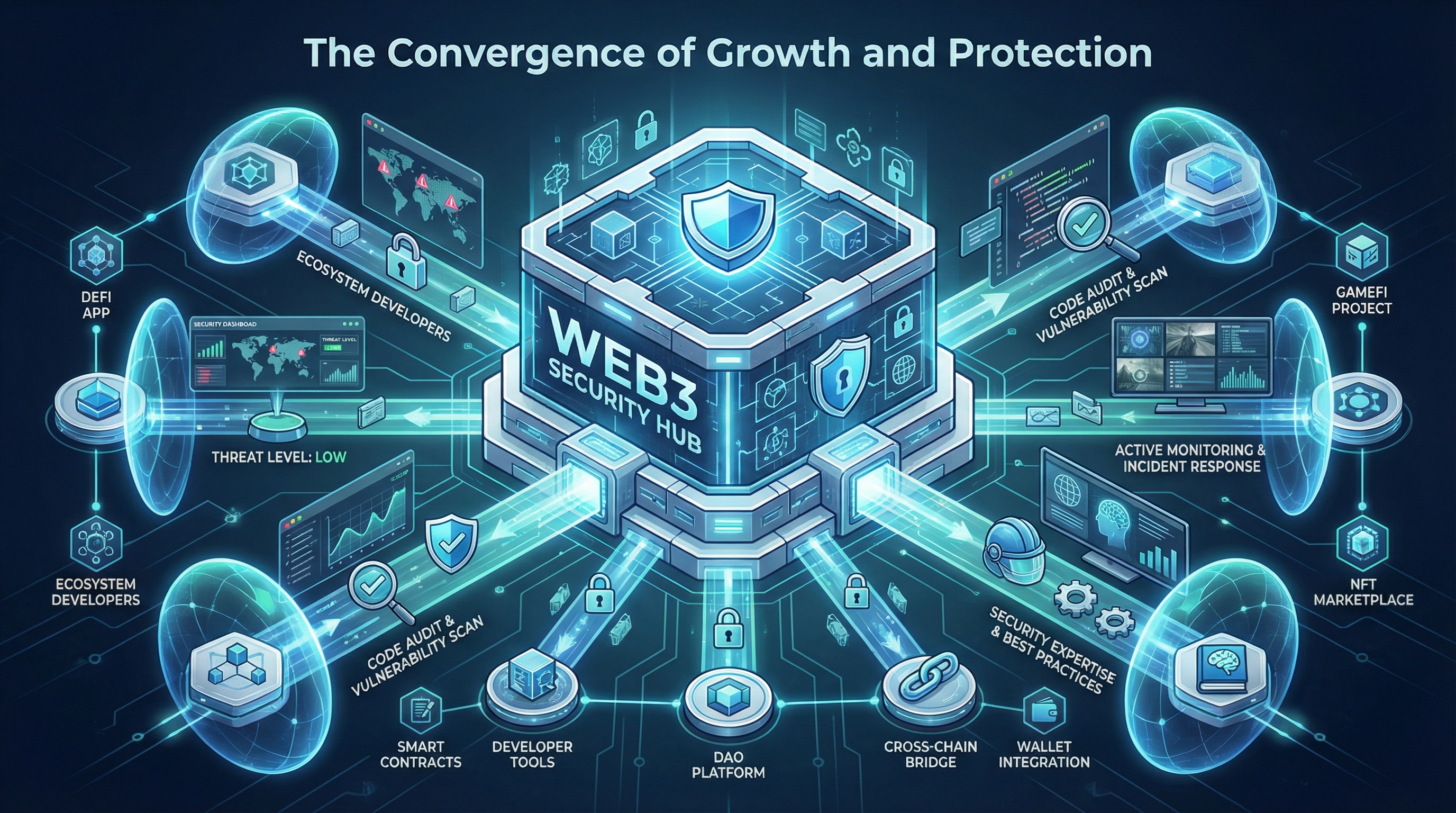 Image: A modern Security Operations Center (SOC), representing the level of security and monitoring required to gain the trust of institutional investors.
Protocols must be able to showcase a comprehensive security posture that covers the entire technology stack. This includes robust internal controls, a mature risk management framework, and adherence to internationally recognized security standards. Certifications such as SOC 2 Type II and ISO 27001 are no longer optional; they are table stakes for engaging with institutional capital [3]. As the only ISO 27001-certified independent staking provider, Blockdaemon sets a benchmark for the level of security required.
A crypto-native Security Operations Center (SOC) is another critical component. Unlike traditional IT security, a crypto-native SOC provides 24/7 monitoring of on-chain activity, threat detection specific to blockchain vulnerabilities (like smart contract exploits and governance attacks), and rapid incident response capabilities. For an institutional investor, knowing that a protocol has this level of protection is a fundamental requirement. It demonstrates that the project is not just a collection of smart contracts, but a mature organization with the processes and infrastructure to safeguard assets at scale.
Furthermore, protocols must offer robust solutions for key management and custody. While the ethos of Web3 is decentralization, institutional investors require secure, compliant, and often insured custody solutions. Non-custodial products are attractive, but they must be complemented by institutional-grade wallet and vault solutions that provide multi-layer security, advanced access controls, and disaster recovery mechanisms. Offering 100% slashing-risk coverage for staked assets, for example, is a powerful signal of a protocol's commitment to protecting its clients' capital [3].
Conclusion: The Path to Success
The Middle East represents a generational opportunity for Web3 protocols. The confluence of deep capital, government-led ambition, and a desire for financial sovereignty creates a fertile ground for innovation. However, the region's complexities demand a strategy that is as sophisticated as the investors it seeks to attract. Capital is a commodity; strategic insight is the differentiator.
Success in the GCC will not be defined by the size of a project's treasury, but by its ability to navigate the intricate web of regulation, build deep-seated relationships grounded in trust, and demonstrate an unwavering commitment to institutional-grade security. The protocols that thrive will be those that move beyond a purely technological or financial pitch and present themselves as long-term strategic partners, aligned with the region's ambitious vision for its future. For founders and CISOs looking to enter this market, the message is clear: do your homework, invest in relationships, and build a security framework that is second to none. The treasure of the Gulf is not for the unprepared.
References
[1] Chainalysis. (2024, September 25). Middle East & North Africa: Regulatory Momentum and DeFi Fuel Adoption. Retrieved from https://www.chainalysis.com/blog/middle-east-north-africa-crypto-adoption-2024/
[2] Kolkaila, A. (2025, May 21). The Future of Cryptocurrency in the Gulf Cooperation Council Countries. Carnegie Endowment for International Peace. Retrieved from https://carnegieendowment.org/research/2025/05/the-future-of-cryptocurrency-in-the-gulf-cooperation-council-countries?lang=en
[3] Blockdaemon. (n.d.). Blockchain Security & Compliance | ISO 27001 & SOC 2 Type II Certified. Retrieved November 30, 2025, from https://www.blockdaemon.com/security


